
48-Month Milestones
What many children do by 4 years of age — and how caregivers can support development
At four years, many children are becoming more imaginative, independent, and socially aware. They are using language to tell stories, recall experiences, and communicate ideas with greater clarity. Thinking, problem-solving, and coordination skills are advancing rapidly, and children are gaining confidence in self-help tasks, play, and interactions with peers. This page breaks down typical milestone expectations, provides examples of everyday behaviors, and offers activities caregivers can use to support growth across social-emotional, language, cognitive, and physical domains.
Note: These milestone descriptions reflect what most children (about 75% or more) are expected to demonstrate by 48 months of age.
Social & Emotional Milestones
By 48 months, many children:
Comforts others who are hurt or upset, like hugging a crying friend.
Avoids dangerous situations, such as not jumping from high places on the playground.
Engages in pretend play, taking on roles such as teacher, superhero, or animal.
Invites peers to play when no one is around, e.g., “Can I play with Alex?”
Enjoys helping others and taking on small responsibilities.
Adjusts behavior depending on the setting, like being quiet in a library or respectful in a place of worship.
Everyday context:
These behaviors show growing empathy, self-awareness, and social understanding. Children are learning how to manage emotions, cooperate with others, and understand social expectations in different contexts.
Language & Communication Milestones
By 4 years of age, many children:
Talks about daily experiences, such as “I played soccer.”
Answers simple questions like “What is a coat for?” or “What is a crayon for?”
Speaks in sentences of four or more words.
Recites words or lines from songs, stories, or nursery rhymes.
Everyday context:
These milestones show how children are combining understanding and expression. They are starting to use language intentionally to communicate ideas, ask questions, and describe their experiences.
Cognitive (Thinking & Learning) Milestones
By 48 months, many children:
Can name the colors of objects.
Predicts what happens next in familiar stories.
Draws a person with three or more body parts, like stick figures.
Everyday context:
These behaviors reflect developing problem-solving, reasoning, and observational skills. Children are beginning to recognize patterns, understand cause and effect, and express their ideas visually and verbally.
Movement & Physical Development Milestones
By 4 years old, many children:
Can catch a large ball most of the time.
Serve food or pour water with adult supervision.
Can unbutton some clothing.
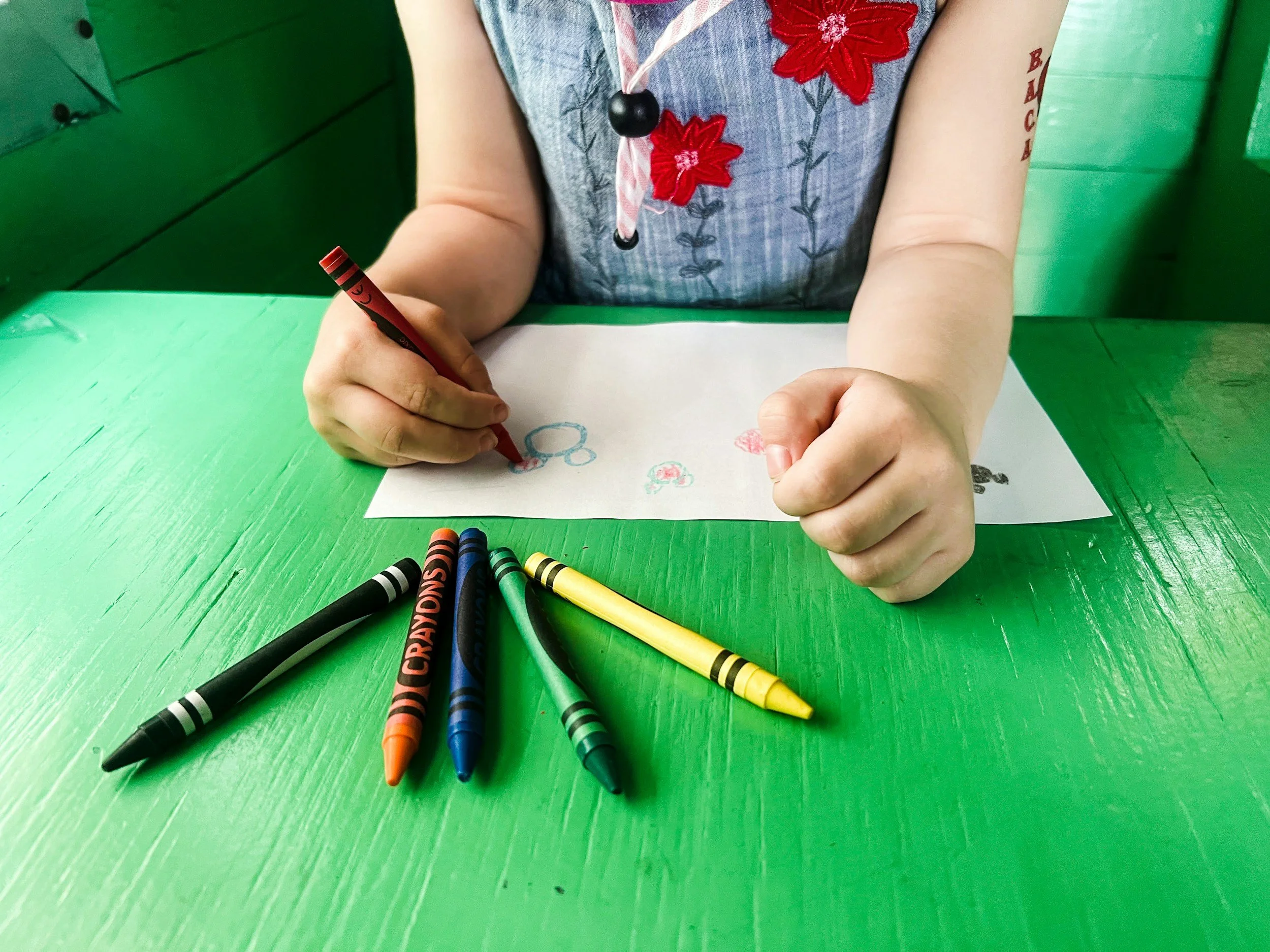
Hold a crayon or pencil between fingers and thumb rather than in a fist.
Everyday context:
These actions show growing coordination, fine motor control, and independence. Physical skills are advancing to support everyday tasks, self-care, and play activities.
How You Can Support Your Baby’s Development
At 4 years of age, children are developing independence, social skills, language, thinking, and coordination. By integrating these activities into everyday routines and play, caregivers can help children practice new skills naturally. Each activity provides opportunities to explore, solve problems, and engage with others in meaningful ways.
You can support development by:
Helping your child become comfortable with new places and people. Reading stories or role-playing scenarios helps them feel secure and confident in unfamiliar settings.
Reading together and asking questions about the story. Asking, “What is happening?” or “What do you think will happen next?” supports language, comprehension, and memory skills.
Teaching your child about colors, shapes, and sizes. Asking about objects they see each day strengthens early cognitive skills and observation.
Encouraging your child to use words to ask for things and solve problems. Modeling phrases like “Can I have a turn?” helps them practice communication and self-regulation.
Helping your child understand others’ feelings and respond positively. Noticing when someone is sad and offering support builds empathy and social awareness.
Using positive attention to reinforce wanted behaviors. Praising, sharing, or cooperation encourages repeated prosocial behavior and self-confidence.
Explaining simply why certain behaviors aren’t allowed and offering alternatives. Giving choices helps children understand rules while practicing decision-making and self-control.
Encouraging play with peers at parks, libraries, or playgroups. Social play supports friendship skills, cooperation, and learning to navigate group dynamics.
Eating meals together whenever possible. Seeing adults enjoy healthy foods encourages healthy eating habits and models nutrition awareness.
Establishing a calm bedtime routine. Consistent routines and avoiding screens before bed support sleep quality, which is critical for growth and learning.
Providing toys and materials that encourage imaginative play. Dress-up clothes, pretend cooking tools, and blocks foster creativity, problem-solving, and social role-play.
Answering your child’s “why” questions thoughtfully. Exploring answers together nurtures curiosity, reasoning, and critical thinking.
Counting everyday objects like fingers, toys, or food items. This develops early numeracy and number recognition in meaningful contexts.
Offering simple, healthy choices. Letting your child choose between two or three options promotes independence and decision-making.
Teaching skills for playing with others. Practicing words, sharing, and taking turns builds cooperation and social-emotional regulation.
Teaching outdoor games with friends, like tag or hide-and-seek. Physical play strengthens coordination, stamina, and teamwork skills.
Speaking to your child in full sentences using rich vocabulary. Using complete sentences supports language development and early literacy skills.
Letting your child help with simple chores. Tasks like bringing in the mail or feeding a pet build responsibility, independence, and fine motor skills.
Practicing stopping and waiting. Playing red light/green light or freeze dance helps children develop impulse control and attention.
Playing music and dancing together. Taking turns copying movements strengthens coordination, rhythm, and social engagement.
Giving your child opportunities to solve conflicts with peers. Letting them work through disagreements with guidance fosters problem-solving and negotiation skills.
Using sequencing words such as “first,” “second,” and “finally.” Asking what happens next supports logical thinking and understanding of order and routines.
Comforting your child when they are afraid and talking through fears. Offering reassurance helps them develop emotional regulation and coping strategies.
Playing simple games like Tic-Tac-Toe or matching. These games enhance reasoning, focus, and turn-taking skills.
Providing daily active play and letting your child choose the activity. Choosing activities promotes autonomy, physical fitness, and engagement.
Helping your child recognize the impact of their actions on others. Encouraging apologies and reparative actions builds empathy and moral reasoning.
Visiting the library regularly and letting your child select books. Choosing books nurtures curiosity, language development, and a love of reading.
Development is supported when caregivers provide responsive guidance, gentle challenges, and opportunities for exploration in everyday routines. These activities can be integrated naturally into daily life and do not require special equipment or strict schedules, creating a foundation for new skills to emerge.
Printable Tools & Next Steps
Download or view a checklist you can use during everyday routines to track which milestones your baby is demonstrating. Don’t forget to bring your checklist to well-child visits and use it to support conversations with your pediatric healthcare provider.
Are you concerned about your child's development? Learn how to Act Early.
Test Your Knowledge
A quick check — or a fast refresher if you’re short on time
1. Social - A child who pretends to be a teacher, superhero, or animal during play and comforts a friend who is hurt is demonstrating:
A. Imagination only
B. Social awareness and empathy
C. Empathy only
-
B. Social awareness and empathy
2. Language – When a child speaks in sentences of four or more words, recites parts of songs or stories, and talks about daily events, this shows:
A. Intentional communication and growing vocabulary
B. Memorization without understanding
C. Cause and effect reasoning
-
A. Intentional communication and growing vocabulary
3. Cognitive – A child who names colors, predicts what happens next in a story, and draws a person with three or more body parts demonstrates:
A. Artistic talent only
B. Reasoning, problem-solving, and observation skills
C. Emotional self-regulation
-
B. Reasoning, problem-solving, and observation skills
4. Movement – A child who catches a large ball most of the time, serves food with supervision, unbuttons clothing, and holds a crayon between fingers and thumb shows:
A. Improving coordination, fine motor skills, and independence
B. Advanced athletic ability only
C. Readiness for formal schooling
-
A. Improving coordination, fine motor skills, and independence
Please note that…
This information is intended to support learning and awareness, not to replace guidance from a healthcare or early childhood professional.