
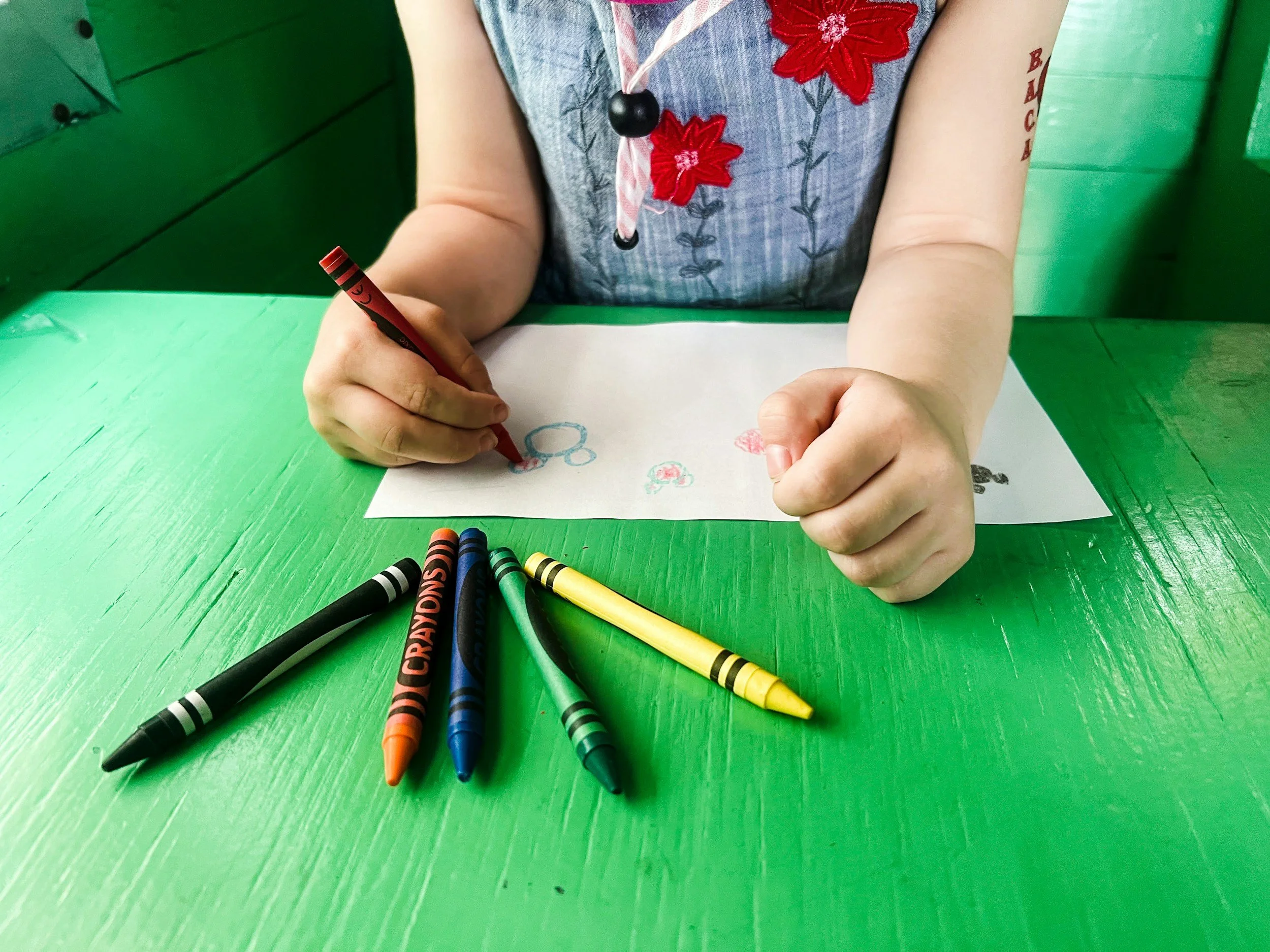
60-Month Milestones
What many children do by 5 years of age — and how caregivers can support development
By five years, many children are strengthening independence, cooperation, and confidence as they prepare for more structured learning environments. They are using language to tell stories, sustain conversations, and play with sounds and words, while cognitive skills like counting, attention, and early literacy continue to develop. This page outlines typical milestone expectations, shares everyday examples, and highlights ways caregivers can support growth across social-emotional, language, cognitive, and physical domains.
Note: These milestone descriptions reflect what most children (about 75% or more) are expected to demonstrate by 60 months of age.
Social & Emotional Milestones
By 60 months, many children:
Follows rules and takes turns when playing games with other children.
Performs for others by singing, dancing, or acting.
Completes simple household chores, such as matching socks or clearing the table after meals.
Everyday context:
These behaviors reflect growing self-control, cooperation, and confidence. Children are learning social rules, taking pride in helping, and expressing themselves in front of others.
Language & Communication Milestones
By 5 years of age, many children:
Tells a story with at least two connected events, whether remembered or imagined.
Answers basic questions about a story or book after it is read aloud.
Maintains a conversation with more than three back-and-forth exchanges.
Uses or recognizes simple rhymes, such as bat–cat or ball–tall.
Everyday context:
These skills show increasingly complex language use, including storytelling, comprehension, and sound awareness. Children are organizing ideas, recalling details, and playing with language in ways that support early reading skills.
Cognitive (Thinking & Learning) Milestones
By 60 months, many children:
Counts to 10.
Identifies some numbers between 1 and 5 when shown.
Uses words related to time, such as “yesterday,” “tomorrow,” “morning,” or “night.”
Sustains attention for 5–10 minutes during activities like story time or arts and crafts.
Writes some letters in their own name.
Recognizes some letters when pointed out.
Everyday context:
These behaviors indicate the development of early math, literacy, and attention skills. Children are beginning to understand numbers, symbols, sequences, and time while strengthening focus and memory.
Movement & Physical Development Milestones
By 5 years old, many children:
Buttons some buttons, without assistance.
Hops on one foot, without falling over.
Everyday context:
These actions demonstrate improved balance, coordination, and fine motor control. Physical skills at this age support independence in self-care and readiness for more structured learning environments.
How You Can Support Your Baby’s Development
These activities support your 5-year-old child as they build independence, self-control, language, thinking skills, and coordination. When woven into everyday routines and play, they help children practice skills they need for school readiness and social participation. Each activity creates opportunities to problem-solve, communicate, and grow confidence.
Here are some ways you can support development :
Teach your child about safe and unsafe touch. Learning body autonomy and how to say “no” supports personal safety and confidence.
Teach your child who to ask for help if lost. Knowing trusted helpers and full names builds safety awareness and preparedness.
Encourage pretend play using everyday items. Dress-up and role play support imagination, social understanding, and problem-solving.
Provide art supplies for creative expression. Drawing, cutting, and gluing strengthen fine motor skills and creativity.
Spend time at the playground practicing new movement skills. Activities like swinging and climbing build strength, coordination, and confidence.
Create a consistent, screen-free bedtime routine. Good sleep supports attention, learning, mood regulation, and overall health.
Read aloud and ask predictive questions. Talking about stories builds comprehension, vocabulary, and thinking skills.
Explore your child’s interests together. Following interests encourages curiosity, motivation, and deeper learning.
Make time each day for active play that your child chooses. Choice-based movement supports physical health and independence.
Respond calmly to back-talk or inappropriate language. Limiting attention to unwanted behavior while praising respectful communication supports self-control.
Help your child prepare for new places and people. Reading stories and role-playing new experiences builds confidence and reduces anxiety, especially for Kindergarten readiness.
Offer activities that allow your child to take the lead and act independently. Taking ownership of play builds confidence, decision-making, and self-motivation.
Ask your child to explain what they are playing and why. Follow-up questions like “why” and “how” support reasoning, language expansion, and expressive thinking.
Play with puzzles, building blocks, and toys that fit pieces together. These activities strengthen problem-solving, spatial awareness, and persistence.
Use everyday language to talk about time. Words like “yesterday,” “today,” and “tomorrow” help children begin to understand sequencing and routines.
Let your child do daily tasks independently, even if imperfect. Allowing effort without correction builds confidence, fine motor skills, and independence.
Talk openly about emotions and label feelings. Naming feelings in yourself and others supports emotional awareness and self-regulation.
Play rhyming games together. Rhyming builds sound awareness, which is an important foundation for reading.
Play games that require following rules. Board games, card games, and Simon Says help children practice self-control, attention, and turn-taking.
Create a safe, calm space your child can use when upset. Having a consistent place to calm down supports emotional regulation and coping skills.
Set clear limits on screen time. Limiting screens helps protect time for play, conversation, movement, and learning through interaction.
Share meals together without screens. Family meals support communication skills, social connection, and healthy routines.
Encourage your child to “read” pictures and tell the story. This builds storytelling skills, memory, and early literacy development.
Play games that strengthen memory and attention. Games like I Spy, Hot and Cold, and Tic Tac Toe support focus and flexible thinking.
Encourage play with other children. Playing with peers helps children practice sharing, cooperation, and friendship skills.
Development is supported when caregivers provide responsive guidance, gentle challenges, and opportunities for exploration in everyday routines. These activities can be integrated naturally into daily life and do not require special equipment or strict schedules, creating a foundation for new skills to emerge.
Printable Tools & Next Steps
Download or view a checklist you can use during everyday routines to track which milestones your baby is demonstrating. Don’t forget to bring your checklist to well-child visits and use it to support conversations with your pediatric healthcare provider.
Are you concerned about your child's development? Learn how to Act Early.
Test Your Knowledge
A quick check — or a fast refresher if you’re short on time
1. Social - A child who follows rules during games, takes turns with others, and completes simple chores at home is showing:
A. Advanced physical strength
B. Growing independence and cooperation
C. Preference for adult interaction only
-
B. Growing independence and cooperation
2. Language – When a child tells a story with multiple events, answers questions about a book, keeps a conversation going, and recognizes simple rhymes, this demonstrates:
A. Memorization without understanding
B. Developing expressive language and early literacy skills
C. Only social interest
-
B. Developing expressive language and early literacy skills
3. Cognitive – A child who counts to 10, identifies some numbers and letters, uses time-related words, and stays focused for several minutes is developing:
A. Early academic and attention skills
B. Artistic ability only
C. Physical coordination only
-
A. Early academic and attention skills
4. Movement – A child who buttons clothing and hops on one foot is demonstrating:
A. Readiness for competitive sports
B. Improving balance and fine motor control
C. Interest in physical play only
-
B. Improving balance and fine motor control
Please note that…
This information is intended to support learning and awareness, not to replace guidance from a healthcare or early childhood professional.