
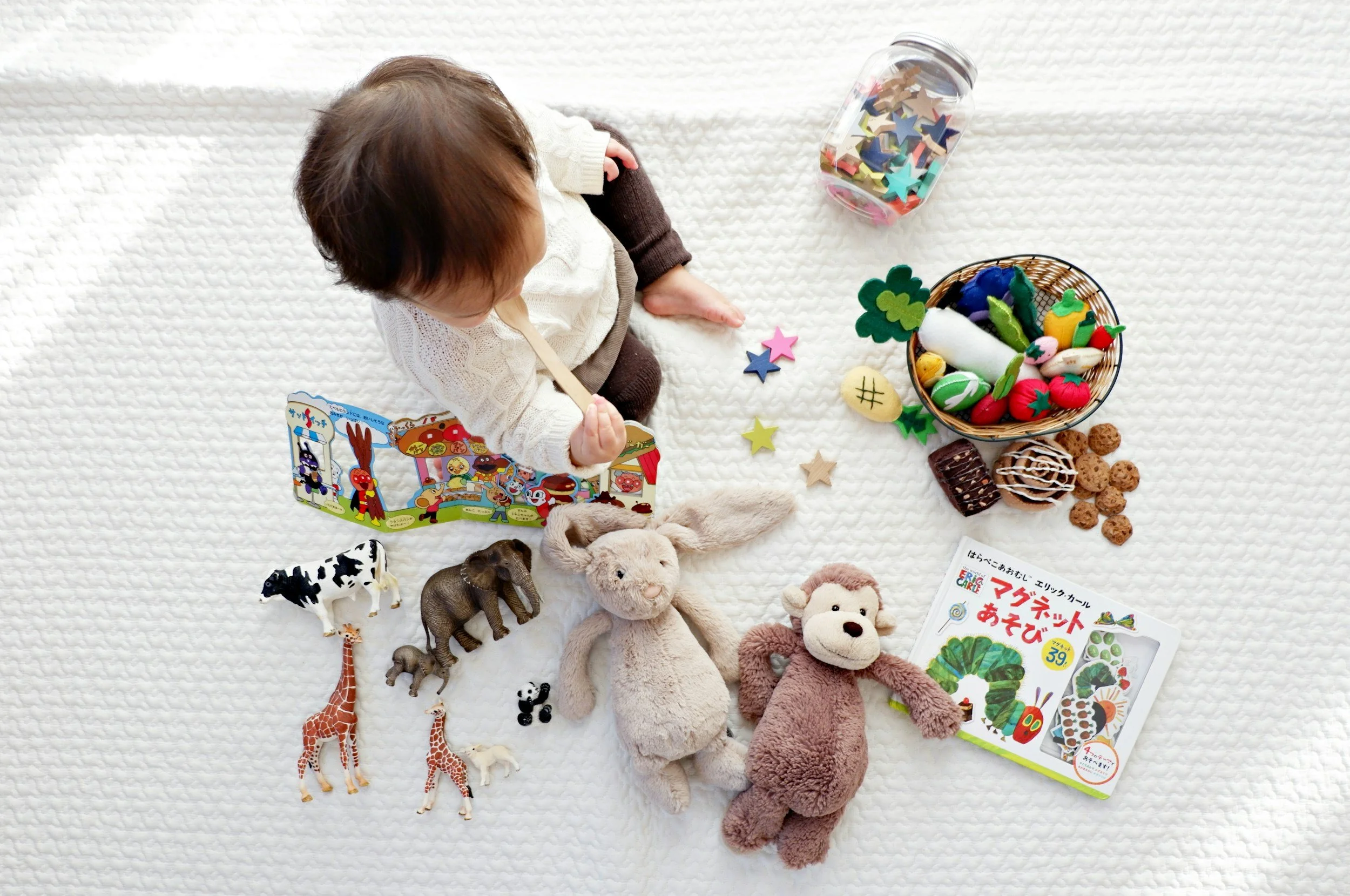
9-Month Milestones
What many babies do by nine months — and how caregivers can support development
At nine months, many babies are exploring more actively, communicating with greater variety, and showing curiosity about people and objects in their world. This page breaks down common milestone behaviors across developmental areas and offers concrete examples caregivers can observe and support in everyday interactions.
Note: These milestone descriptions reflect what most babies (about 75% or more) are expected to demonstrate by 9 months of age.
Social & Emotional Milestones
By nine months, many babies:
May show shyness, clinginess, or hesitancy around strangers — a normal sign of growing social awareness.
Show several facial expressions such as happy, sad, angry, or surprised.
Turn and look when their name is called.
React when you leave the room — such as looking, reaching, or crying.
Smile or laugh during familiar games like peek-a-boo.
Everyday connection:
These behaviors show increasing emotional engagement and attachment. Sharing smiles, games, and calm responses helps build your baby’s trust and understanding of social interaction.
Language & Communication Milestones
At this age, many babies:
Make a variety of different sounds like “mamamama” or “bababababa.”
Lift their arms up to be picked up when they want to be close to you.
Everyday context:
When your baby makes a familiar sound and you respond with words, you’re practicing early conversational interaction — the foundation of later speech and communication.
Cognitive (Thinking & Learning) Milestones
Many nine-month-olds:
Look for objects that are dropped out of sight, like a toy or spoon — an early sign of memory and cause-and-effect understanding.
Bang two objects together.
What this looks like:
When your baby intentionally searches for a dropped toy or experiments with banging objects, they’re exploring how the world works and learning about cause and effect.
Movement & Physical Development Milestones
By nine months, many babies:
Get into a sitting position by themselves, and sit without support.
Move objects from one hand to the other, showing increased coordination and control.
Use fingers to “rake” food toward themselves.
Begin to find ways to move and explore, such as crawling, scooting, rolling, or "commando" crawling.
Everyday example:
A baby who sits well, transfers objects hand-to-hand, or brings food toward themselves during meals is practicing strength, coordination, and intentional movement.
How You Can Support Your Baby’s Development
At nine months, babies are learning through movement, exploration, and social back-and-forth. Many are sitting, crawling, pulling to stand, and using their hands to explore objects in new ways, while also becoming more expressive with sounds, gestures, and facial expressions. Development at this age is supported by floor play, opportunities to move and explore safely, responsive communication, and simple games that involve imitation and cause and effect. Everyday routines and playful interactions help babies connect actions with outcomes and build early problem-solving and communication skills.
Here’s how you can support development:
Repeat your baby’s sounds and build simple words from them. For example, if your baby says “bababa,” you can repeat “bababa,” then say “book” as you show a book.
Place toys on the floor or a play mat a little out of reach and encourage your baby to crawl, scoot, or roll to get them. Celebrate when they reach the toy.
Teach your baby simple gestures like waving “bye-bye” or shaking their head “no.” You can also use simple sign language to give them tools to communicate before words emerge.
Play games like peek-a-boo or “my turn, your turn.” Passing a toy back and forth helps babies learn about interaction, timing, and anticipation.
“Read” with your baby by talking about pictures. For example, while looking at books or magazines, name what you see and let your baby point or touch.
Encourage self-feeding with safe finger foods and let your baby practice using a small cup with water while you sit beside them. Expect spills — learning is often messy!
Help your baby get used to new tastes and textures. Smooth purées, mashed foods, or finely chopped items give varied sensory experiences as they learn to eat.
Say a cheerful goodbye when you leave, and let your baby know when you return — this consistency supports emotional regulation and trust.
Stay close by as your baby explores and moves around your home so they feel safe while learning.
Establish consistent routines for sleep and feeding. Predictable patterns support a baby’s sense of safety and help them anticipate daily rhythms.
Make games of everyday actions, like dropping and picking up toys. Returning dropped objects helps babies learn cause and effect.
Describe what your baby is looking at (“red round ball”) to support early language and categorization.
Play hide-and-seek games with objects, like hiding a toy under a blanket and letting your baby look for it.
Provide safe places for exploration. Baby-proof your home so your baby can move, reach, and learn safely.
Put your baby close to sturdy furniture they can pull up on safely. This supports strength, balance, and early standing skills.
Note: Screen time for infants younger than 2 years is not recommended except for video calls with loved ones; babies learn best through talking, playing, and interacting with people.
Printable Tools & Next Steps
Download or view a checklist you can use during everyday routines to track which milestones your baby is demonstrating. Don’t forget to bring your checklist to well-child visits and use it to support conversations with your pediatric healthcare provider.
Are you concerned about your child's development? Learn how to Act Early.
Test Your Knowledge
A quick check — or a fast refresher if you’re short on time
1. Social - Your baby begins showing caution or shyness around new people. This reflects:
A. They’re just tired from activity
B. Normal social attachment and awareness
C. Only learned behavior from home
-
B. Normal social attachment and awareness
2. Language – If your baby turns toward you when you call their name, this demonstrates:
A. A preference for your voice over others
B. That they are ready to say their own name
C. Early listening and attention to familiar sounds
-
C. Early listening and attention to familiar sounds
3. Cognitive – When your baby searches for a toy you dropped out of sight, they are practicing:
A. Only fine motor skills
B. Memory and understanding that objects continue to exist
C. Eye movement control only
-
B. Memory and understanding that objects continue to exist
4. Movement – A baby who sits without support is demonstrating:
A. A sign that they will walk early
B. Increased strength and balance without support
C. That they don’t need tummy play anymore
-
B. Increased strength and balance without support
Please note that…
This information is intended to support learning and awareness, not to replace guidance from a healthcare or early childhood professional.